
Color Coding of Kratom: Classification System and Terminology
Kratom under the new PML legal framework
Since November 2025, a major legislative change has come into effect in the Czech Republic. Based on Act No. 321/2024 Coll., kratom (Mitragyna speciosa) has been classified as a psychomodulatory substance (PML). This step ended the period of an unregulated market and introduced strict rules for its distribution, storage, and labeling. Kratom is no longer considered ordinary goods, but a substance subject to supervision by the State Agricultural and Food Inspection Authority (SZPI), ensuring greater transparency and safety of products on the market.
Classification system: Color as a mandatory “subtype”
Under the new legal framework, color designation is no longer just a marketing label but becomes a legal requirement for product identification. According to Decree No. 448/2025 Coll., the label must follow a precise hierarchy of information, where color is defined as a “subtype” of the substance. This precise terminology is crucial for traceability of each batch and its correct classification in the mandatory electronic registry.
Technical and alkaloid specification of color subtypes
The main technical difference between subtypes is their analytical profile, defined by the content of major alkaloids – especially mitragynine and 7-hydroxymitragynine. Legislation sets a limit of a maximum of 1,250 mg of mitragynine and 50 mg of 7-hydroxymitragynine per 50g package. Analyses in accredited laboratories, such as BAFA at the University of Chemistry and Technology, confirm the following parameters of individual subtypes:
Green kratom: Technically shows the highest mitragynine concentration, reaching up to 1.6% (w/w) in selected batches (e.g., L20261002).
White and yellow kratom: These variants show stable values in the range of 1.4% to 1.5% mitragynine.
Gold kratom: Analytical measurements (e.g., batch L20264001) confirm a mitragynine level of 1.4% (w/w).
Red and brown kratom: From a technical perspective, these subtypes have a lower mitragynine content, typically between 0.7% and 0.9%.
Permitted color subtypes on the Czech market
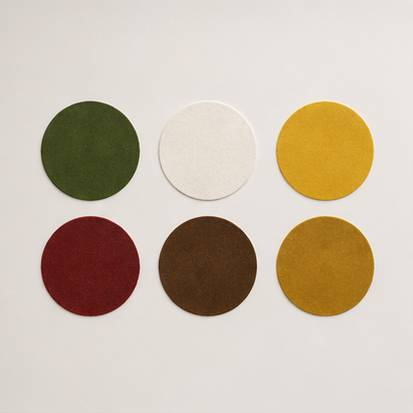
The current legislative system allows the distribution of six basic color subtypes in the Czech Republic: green, white, yellow, red, brown, and gold. Each product must undergo contaminant testing under strict limits:
- Heavy metals: Maximum permitted levels for arsenic (0.5 mg/kg), lead (3.0 mg/kg), cadmium (1.0 mg/kg), and mercury (0.1 mg/kg).
- Microbiology: Testing for Salmonella (must be negative), E. coli, and limits for mold and yeast.
Technical aspects of processing and botanical origin
Kratom from Plody země comes from wild-growing trees in Indonesia. The production process takes place in hygienically certified facilities, where raw material in 1 kg vacuum bags is disinfected and then repackaged into final 50g packages.
An important technical step to ensure purity is gamma irradiation treatment. Although laboratory analyses cannot retrospectively prove whether the treatment was applied, its use is highly recommended to eliminate unwanted microflora and ensure the safety of each color batch. Each batch is then labeled with a unique code (starting with the letter “L”), which accompanies the product throughout the entire process from production to sale to the end customer.
Conclusion: Transparency and safety through precise labeling
The introduction of a clear classification system and mandatory testing in accredited laboratories raises the standard of the entire industry. Plody země is based on an individual approach and guarantees that each subtype meets not only visual requirements but especially strict analytical limits for purity and alkaloid profile. Transparent labeling is thus key to sustainability and safety within the new market for psychomodulatory substances.