
Laboratory testing of kratom: methodologies and monitored parameters
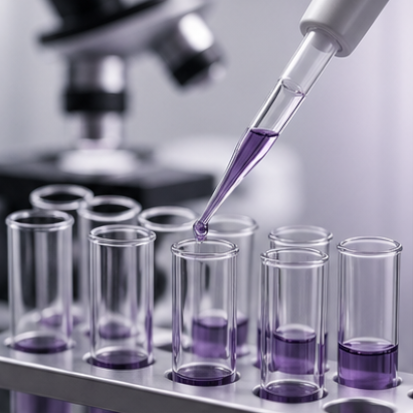
Analytical quality control of psychomodulatory substances (PML) requires strict adherence to laboratory protocols and monitoring of specific purity parameters; therefore, laboratory testing of kratom is carried out. Each production batch of leaves from the plant Mitragyna speciosa must be examined in an accredited laboratory before being placed on the market to ensure compliance with safety limits established for health protection.
Determination of alkaloid content and legal limits for kratom
The main focus of analytical testing is the quantification of active compounds, specifically mitragynine and 7-hydroxymitragynine. Precise concentration limits are defined for powdered form. The maximum permissible amount of mitragynine in a 50 g package is 1,250 mg, corresponding to a concentration of 2.5%. For 7-hydroxymitragynine, the limit is set at 50 mg per package (0.1%). These values are determined in laboratories using the standard operating procedure SOP-A-01. If measured values exceed these limits, the batch is considered non-compliant and must not be released for sale.
Microbiological criteria and monitored pathogens
Due to the plant origin of the material, microbiological stability is a critical parameter. Several contamination indicators are monitored. The total microbial count (TMC) must not exceed 107 CFU/g. For molds and yeasts, the limit is set at 105 CFU/g. Special attention is given to pathogenic bacteria, where the presence of Salmonella spp. must be negative in a 25 g sample and the level of E. coli must not exceed 100 CFU/g. Laboratories follow standards ČSN EN ISO 4833-1 (TMC), ČSN ISO 21527-2 (molds and yeasts), and ČSN EN ISO 6579-1 (Salmonella).
Analytical procedures for detecting heavy metals in kratom
Testing for heavy metals is essential to exclude environmental contamination from the country of origin. Four key elements are monitored with the following maximum limits:
- Arsenic (As): 0.5 mg/kg.
- Cadmium (Cd): 1.0 mg/kg.
- Lead (Pb): 3.0 mg/kg.
- Mercury (Hg): 0.1 mg/kg.
ICP-MS (inductively coupled plasma mass spectrometry) according to ČSN EN ISO 17294-1,2 is used to measure arsenic, cadmium, and lead concentrations. Mercury content is analyzed using specialized atomic analyzers AMA 254.
Monitoring of mycotoxins and polycyclic aromatic hydrocarbons (PAHs)
Another monitored risk involves fungal metabolic byproducts—mycotoxins. The limit for aflatoxin B1 is set at 0.005 mg/kg (5 µg/kg), and the total aflatoxin content (sum of B1, B2, G1, and G2) must not exceed 0.01 mg/kg (10 µg/kg). Organic contaminant testing also includes polycyclic aromatic hydrocarbons (PAHs), specifically benzo[a]pyrene and the sum of 4 PAHs, with a limit of 0.05 mg/kg. These analyses use liquid chromatography (B-TABLCF02) and gas chromatography with mass detection (B-PAHHMS01).
Sampling methodology and laboratory certification
For results to be legally valid, testing must be performed by a laboratory accredited by the Czech Accreditation Institute according to ČSN EN ISO/IEC 17025:2018. Each sample submitted for analysis must be in final packaging and properly labeled with a batch number (format L + 8 digits) to ensure full traceability of results to the production batch. The output of testing is a Test Report, which includes measured values, measurement uncertainty, and a statement of conformity confirming whether the batch meets safety requirements. These documents are a key part of technical documentation and must be retained for at least 5 years.